In the previous article, we looked at what patent examiners actually look for during examination.
But that raises another question.
What happens between filing the application and getting a patent?
For many first-time inventors, submitting the application feels like the end of the process.
It isn't.
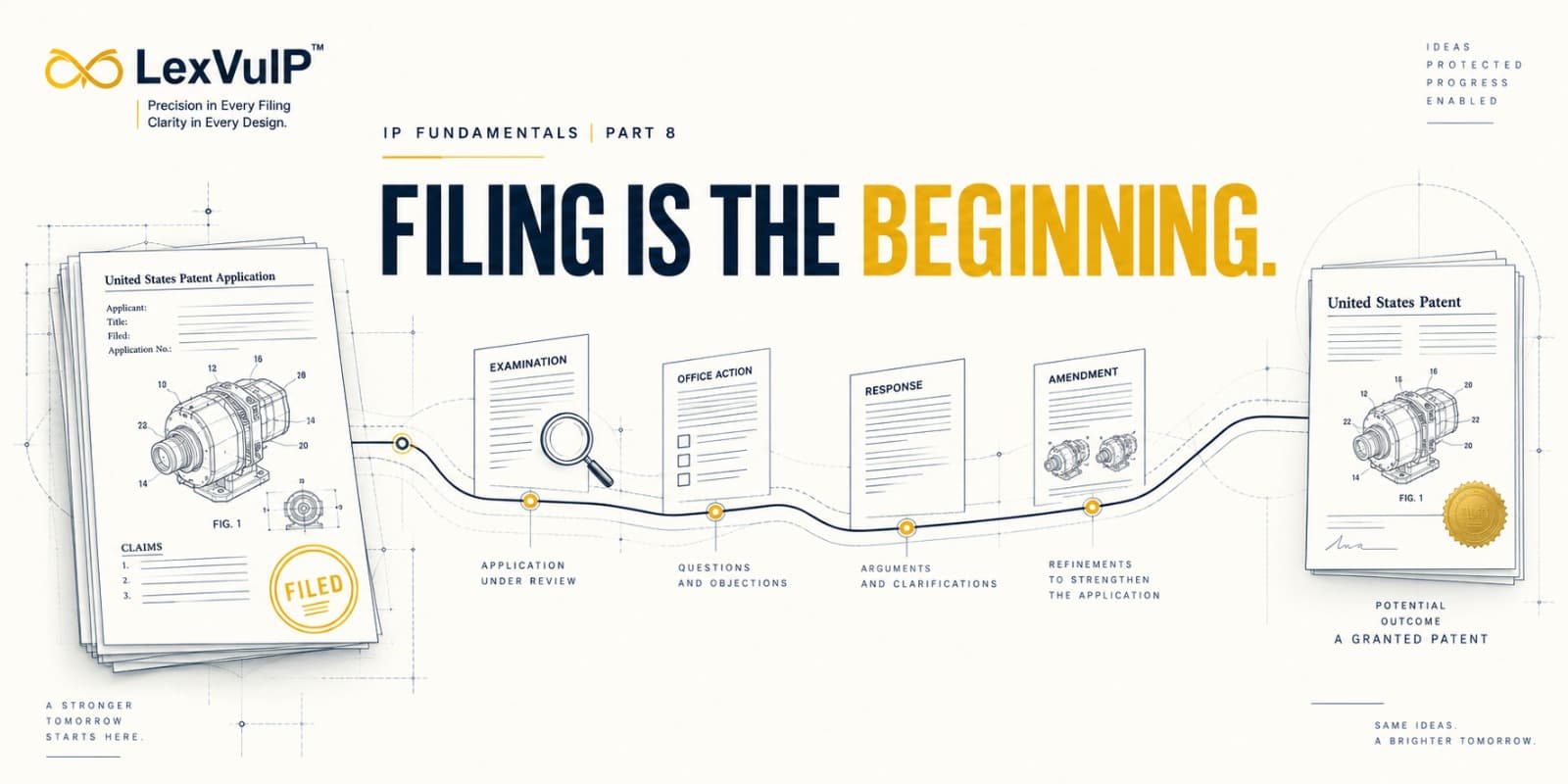
Filing establishes an important milestone, but the application may still go through examination, correspondence, amendments, responses, and several other procedural steps before a patent is granted.
Understanding what happens after filing can make the process much less confusing and help inventors plan ahead.
Filing Is the Beginning of the Prosecution Process
Once a patent application is filed, it enters the patent system.
What happens next depends on the jurisdiction, the type of application, and the applicable procedural requirements.
But the general journey can involve:
Filing → Examination → Office Action → Response → Further Examination → Grant or Other Outcome
Not every application follows exactly the same path.
Some may proceed relatively smoothly.
Others may involve several rounds of examination and amendments.
The important point is that filing the application doesn't mean the patent office has accepted the invention.
It means the examination process can begin.
What Happens Immediately After Filing?
After filing, the applicant receives confirmation and filing information associated with the application.
The application then moves through the relevant administrative and procedural stages.
Depending on the jurisdiction and filing route, this may include:
- Formality review.
- Assignment or applicant information checks.
- Publication.
- Request for examination, where applicable.
- Prior-art searching.
- Substantive examination.
The exact sequence and timing vary between patent offices.
That's why inventors shouldn't assume that every patent application follows the same timetable.
Publication Doesn't Mean Grant
This is an important distinction that many inventors misunderstand.
A patent application may be published before a patent is granted.
Publication generally makes the application available to the public according to the applicable rules.
But publication does not mean the patent office has determined that the invention is patentable.
The application may still be under examination.
It may receive objections.
Claims may be amended.
The application may ultimately proceed to grant, or it may not.
Think of publication as making the application visible, not as receiving the patent.
Then Comes Examination
This is where the issues discussed in Part 7 become relevant.
The examiner may consider questions relating to:
- Novelty.
- Inventive step or non-obviousness.
- Clarity.
- Support.
- Sufficiency of disclosure.
- Formal requirements.
- Other requirements applicable to the jurisdiction.
The examiner may also identify relevant prior-art documents.
The applicant's patent professional then reviews the examination report and determines how best to respond.
Sometimes the response may involve arguments.
Sometimes amendments may be appropriate.
Sometimes both are needed.
What Is an Office Action?
An office action is a communication from the patent office identifying issues that need to be addressed.
The terminology varies between jurisdictions, but the basic concept is similar.
The examiner is effectively saying:
Here are the issues I have identified. Please address them.
This doesn't necessarily mean the application has failed.
In many cases, it is simply part of the examination process.
The applicant may have an opportunity to respond within the applicable deadline.
That response can become an important part of the prosecution history.
Why the Response Matters
Responding to an examiner isn't simply about disagreeing with an objection.
The response needs to address the examiner's reasoning.
For example, if prior art has been cited, the patent professional may analyse:
What does the prior-art reference actually disclose?
Which claim features are present?
Which features are missing?
How do the claimed elements work together?
Is an amendment appropriate?
Does the proposed amendment remain supported by the original application?
These questions help determine whether the best approach is argument, amendment, or a combination of both.
Amendments Can Change the Application
During prosecution, applicants may sometimes amend claims or other parts of the application to address objections.
But amendments aren't unlimited.
The ability to amend and the scope of permissible amendments depend on the applicable law and the circumstances of the application.
This is why the quality of the original disclosure matters so much.
If an important technical feature was properly disclosed from the beginning, there may be a stronger basis for using that disclosure during prosecution.
If new subject matter is introduced later, different legal issues can arise.
What you disclose at filing can matter long after filing day.
The Patent Drawings May Matter Too
Patent drawings don't simply disappear into the background once an application is filed.
During prosecution, the description, claims, and drawings may need to remain consistent with one another.
Suppose an amended claim introduces or emphasizes a particular structural relationship.
The patent professional may need to confirm that the relevant feature is properly supported by the application.
In applications where drawings are important to understanding the invention, accurate and consistent figures can therefore make prosecution easier to manage.
This is one reason why patent drawings should be prepared with more than just appearance in mind.
They need to communicate the invention accurately and work together with the rest of the application.
Patent Prosecution Can Take Time
One of the biggest misconceptions among first-time inventors is that a patent should move quickly once the application is filed.
Patent prosecution can take considerable time.
The timeline depends on factors such as:
- The patent office.
- The type of application.
- Examination procedures.
- Backlogs.
- Applicant responses.
- Number of examination rounds.
- Amendments and other procedural events.
- Whether accelerated examination options are available.
There is therefore no single timeline that applies to every application.
The important thing is to track the application's procedural events and deadlines carefully.
Deadlines Don't Stop After Filing
This is one of the most important practical lessons.
Some inventors assume that once the application is filed, the major deadline has been handled.
In reality, additional deadlines may arise during prosecution.
These can relate to:
- Examination responses.
- National or regional phase requirements.
- Priority claims.
- Formal requirements.
- Maintenance or renewal requirements after grant.
- Other jurisdiction-specific actions.
Missing a deadline can create unnecessary complications.
Good docketing and deadline management are therefore an important part of the patent process.
Not Every Application Ends in a Grant
Another important point is that filing an application doesn't guarantee a patent.
The application may:
- Proceed to grant.
- Require amendments before grant.
- Continue through further examination.
- Be abandoned.
- Be refused.
- Lead to a narrower scope of protection than originally sought.
The outcome depends on the invention, the application, the prior art, the examination process, and the decisions made during prosecution.
This is why patent strategy shouldn't be viewed as:
File → Wait → Receive Patent
It's better understood as an ongoing process of filing, examination, analysis, response, and decision-making.
A Practical Habit for Inventors
Once your patent application is filed, don't simply put the application away and wait.
Keep your patent professional informed about important developments.
For example:
- Significant improvements to the invention.
- New embodiments.
- Product changes.
- New markets.
- Commercial launches.
- Related inventions.
- Additional disclosures.
- New patent filings.
Your business may continue evolving while the original application is being examined.
That development may create opportunities for additional protection or require a different filing strategy.
Why Patent Attorneys Track More Than the Filing Date
By now, the larger picture should be clear.
The filing date is important.
But it is only one milestone.
Patent professionals may need to track:
Priority dates.
Publication dates.
Examination deadlines.
Office actions.
Response deadlines.
International filing deadlines.
Grant events.
Maintenance or renewal deadlines.
A patent portfolio can involve many moving parts.
Good docketing and prosecution management help ensure that important events don't get lost in the process.
Final Thoughts
Filing a patent application is a major milestone.
But it isn't the finish line.
Once filed, the application begins a journey through examination and prosecution.
There may be prior-art objections, amendments, office actions, responses, deadlines, and strategic decisions along the way.
For inventors, understanding this process makes it easier to work with patent professionals and set realistic expectations.
For patent professionals, it reinforces why the application should be prepared with the entire prosecution journey in mind.
The goal isn't simply to get an application filed.
The goal is to give that application the strongest possible foundation for everything that comes after filing.
I'd like to leave you with one question:
After filing your patent application, do you know what the next important deadline or procedural milestone will be?
If the answer isn't clear, that's a good conversation to have with your patent professional before the application moves further through the system.
Because in patent strategy, filing is a milestone, not the destination.
Legal Note
This article is intended for educational purposes and provides a general explanation of patent prosecution and the procedural steps that may follow after filing a patent application. It is not legal advice. Every invention is different, and the appropriate filing strategy depends on the specific facts, applicable laws, and professional legal advice.